
Warehouse Risks: Identifying and Reducing Operational Risks in Warehouse Logistics
Reading time: approx. 8 minutes
Warehouses are dynamic environments where goods, equipment and employees interact continuously. High throughput, complex storage systems and time pressure can increase the risk of operational disruptions.
Damage to goods, inaccurate inventory data or safety incidents can quickly lead to delays, additional costs and reduced productivity. For this reason, identifying and managing risks is an essential part of efficient warehouse operations.
A structured approach to risk management helps companies maintain safe working environments, protect inventory and ensure stable warehouse processes.
Key Warehouse Risks – and How to Address Them
Even minor disruptions can affect the entire supply chain. Incorrect stock levels may delay order fulfilment, while damaged goods can result in additional handling and replacement costs.
By implementing clear processes, suitable warehouse technologies and regular inspections, companies can significantly reduce operational risks.
The following risk categories are among the most common challenges faced in modern warehouse operations.
1. Product and Equipment Damage
Improper storage, operational errors, or unsuitable racking systems can lead to avoidable costs.
Damage to goods or equipment not only results in direct financial losses but can also disrupt workflows and reduce customer satisfaction. In many cases, the root causes are poorly defined processes, insufficient training, or inadequate storage systems that do not match the characteristics of the stored goods.
Preventing such damage requires a systematic approach that combines well-designed infrastructure with qualified personnel and regular inspections.
Essential measures include:
- standardised processes
- qualified industrial truck operators
- compliant racking systems
- regular inspections and maintenance
2. Inventory Discrepancies and Lack of Transparency
Accurate inventory data is essential for efficient warehouse operations. When system records do not match physical stock levels, companies may experience order delays, production disruptions or unnecessary safety stock.
Digital warehouse management systems provide the transparency required to maintain reliable stock information. By recording stock movements in real time and ensuring consistent documentation, companies can significantly reduce errors and improve planning accuracy.
Solutions include:
- a robust warehouse management system (WMS)
- real-time digital stock tracking
- controlled access and monitoring
3. Inefficient Processes
Unnecessary transport routes, long search times, and poor organisation reduce productivity.
Inefficient warehouse processes often develop gradually as operations grow or change over time. Without regular process analysis, outdated layouts or workflows can lead to avoidable delays and increased operating costs.
Optimising warehouse processes requires a holistic perspective. Layout design, picking strategies, and digital process management must work together to ensure that goods move through the warehouse as efficiently as possible.
Effective approaches include:
- optimised warehouse layout
- well-planned picking strategies
- clearly defined responsibilities
- digital process control
4. Safety Risks in Daily Operations
Collisions, falling loads, or damaged racks endanger both personnel and assets.
Warehouses are dynamic environments where industrial trucks, goods, and employees operate in close proximity. Without clearly structured traffic routes and proper safety measures, the risk of accidents increases significantly.
A comprehensive safety concept combines organisational measures, modern technology, and continuous training. Clear safety standards not only protect employees but also safeguard equipment, infrastructure, and stored goods.
A comprehensive safety concept comprises:
- systematic risk assessments
- compliance with legal regulations (Occupational Health and Safety Act, Operational Safety Ordinance, DGUV regulations)
- regular training
- certified industrial trucks and racking systems
- clear traffic guidance within the warehouse
Safety is not an add-on – it is an integral component of effective warehouse management.
Systematic Warehouse Management as a Strategic Success Factor
Long-term warehouse optimisation cannot rely on isolated measures. Instead, companies need a structured approach that evaluates processes, infrastructure, and technology as an integrated system.
By identifying risks early and addressing them systematically, organisations can improve operational stability while simultaneously increasing productivity. Data-driven decision-making plays an important role in this process, as modern warehouse systems generate valuable insights into stock movements, utilisation levels, and operational performance.
Digital systems provide the transparency needed to detect deviations early and make informed decisions.
Warehouse Management and Safety with Jungheinrich
As an integrated intralogistics partner, Jungheinrich delivers tailored solutions for safe, efficient, and scalable warehouse operations.
By combining consulting expertise, reliable technology, and comprehensive service solutions, Jungheinrich supports companies throughout the entire lifecycle of their warehouse systems. From initial planning to long-term operation, the goal is to create stable processes that maximise both productivity and safety.
The following components form the foundation of a modern warehouse management strategy.
Intralogistics Consultation
Assessment of existing structures and development of a future-proof overall concept.
Through detailed analysis of material flows, storage structures, and operational requirements, Jungheinrich specialists develop tailored concepts that optimise both efficiency and safety.
Racking Systems
Compliant planning, inspections, and protection solutions – from pallet racking to automated systems.
Well-designed racking infrastructure ensures safe storage conditions while enabling efficient access to goods. Regular inspections and protective components further minimise operational risks.
Industrial Trucks
High-performance vehicles with modern assistance systems for increased operational safety and productivity.
Jungheinrich industrial trucks combine ergonomic design, intelligent assistance features, and energy-efficient technology to support safe and reliable warehouse operations.
Warehouse Management System (WMS)
Transparent control of all stock movements in real time to reduce errors and inventory discrepancies.
By integrating digital process control with warehouse infrastructure, the Jungheinrich WMS provides full visibility across all warehouse activities.
Service Solutions
UVV inspections, maintenance, training, and rapid support ensure long-term availability of your systems.
Regular service and preventive maintenance help maintain operational safety while reducing unplanned downtime.
The combination of technology, software, and service creates stable processes – today and in the future.
Looking Ahead: Digitalisation and Automation
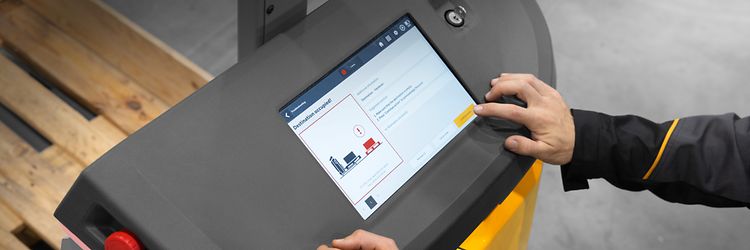
Intralogistics is evolving rapidly. Increasing digitalisation and automation are transforming the way warehouses operate, enabling companies to manage complexity more effectively while improving safety and efficiency.
Technologies such as sensor-based assistance systems, automated transport solutions, and advanced data analytics allow businesses to monitor processes continuously and respond quickly to operational changes.
Modern technologies enable:
- automated material flows
- driver-assistance and sensor systems
- data-driven process optimisation
- predictive maintenance to minimise downtime
People remain central but increasingly take on supervisory and controlling roles. Training and technology go hand in hand.
Conclusion
Safety and efficiency are not mutually exclusive. A structured warehouse management system reduces risks, increases transparency, and enhances operational performance sustainably.
Companies that invest in modern warehouse infrastructure, digital systems, and well-trained personnel are better positioned to meet the growing demands of today’s logistics environment.
With Jungheinrich, you gain a partner that integrates consultancy, system implementation, and service comprehensively.
Optimise your warehouse management strategically – we are here to advise you.